How Australian Addresses, Suburbs and Postcodes Work
A simple guide to unit numbers, street names, suburbs, states and postcodes so newcomers can travel, receive deliveries and search local services confidently.
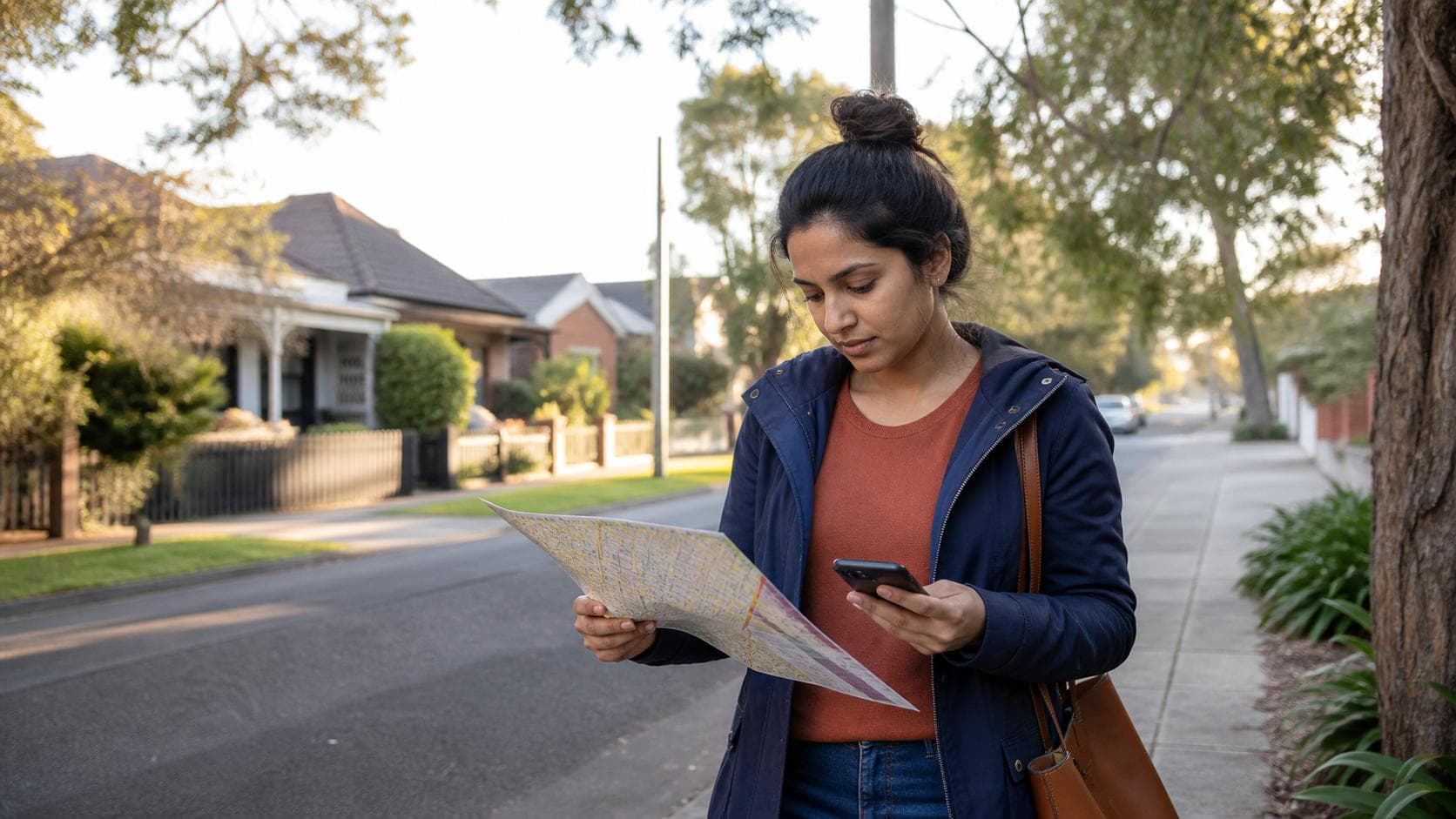
An Australian address is more than a street number. The suburb, state and postcode help distinguish places that may have very similar street names. Miss one line and your parcel may take a more ambitious Australian holiday than you did.
Once you understand the pattern, local searches, deliveries and event travel become much easier.
The usual address order
A typical address places the recipient first, then the unit and street, followed by the suburb or locality, state abbreviation and four-digit postcode. Use the official form provided by the property, organisation or venue.
- Recipient or business name
- Unit, apartment, suite or shop number when relevant
- Street number and street name
- Suburb or locality
- State or territory abbreviation and postcode
Unit numbers come before street numbers
A format such as 4/18 may mean Unit 4 at 18 Example Street. Buildings may also use apartment, level, suite or shop identifiers. Copy the exact format from the lease, building directory or confirmed business details.
For deliveries, add access instructions only in the appropriate field. Do not publish door codes or private security details in a public listing.
A suburb is part of the address, not just a description
Australian cities are divided into suburbs or localities. The suburb name can be essential even when people casually say they live “in Melbourne” or “near Sydney”. A business may serve a wide city area but still have one precise suburb in its address.
Some names exist in more than one state. Always check the state and postcode before travelling or booking a service.
States and territories use short abbreviations
These abbreviations appear in addresses, forms and search filters. A postcode narrows the location further, but it is not always unique to one suburb.