Understanding Australian Seasons, Weather and Everyday Planning
A newcomer-friendly guide to Australia’s seasons, local climate, UV, sudden weather changes and everyday planning using official forecasts and warnings.
20 August 20268 min readAusLanka Editorial Team
Australia’s seasons arrive in the opposite order to the northern hemisphere, and the weather can change dramatically between regions—or between morning tea and the school run. Melbourne may offer four seasons before lunch; Darwin is working from an entirely different menu.
This Australian seasons guide for newcomers explains the basics without pretending one forecast fits a continent. Your local conditions and official warnings always come first.
Start with the southern-hemisphere calendar
For much of Australia, summer is December to February, autumn is March to May, winter is June to August and spring is September to November. The Bureau of Meteorology explains that northern tropical areas are often better understood through wet and dry seasons.
Season names are only a starting point. Hobart, Brisbane, Perth, Alice Springs and Cairns can have very different temperatures and hazards on the same day.
Learn the climate of your actual suburb
Check typical temperatures, rainfall and seasonal conditions for the place where you live, not only the nearest famous city. Coastal winds, elevation, tropical humidity and inland heat can change what “a nice day” requires.
Ask local schools, workplaces or community groups about practical habits such as heating, cooling, uniforms and storm plans. Local knowledge is useful; official advice remains the tie-breaker.
Check the forecast before planning the outfit
Use the Bureau of Meteorology website or app for forecasts and warnings. Look at temperature, rain, wind and warning information rather than a single weather icon. A cheerful sun symbol can still share the day with strong wind or dangerous UV.
Check the forecast the night before and again before travel
Save official warning pages for your area
Allow extra time when storms, smoke, flooding or extreme heat may affect transport
Follow emergency-service instructions for serious events
Treat UV as separate from temperature
UV can be high on a cool or cloudy day. The Bureau’s UV guidance recommends sun protection when the UV Index is 3 or above. Check current advice and use a combination of protection measures suited to the activity.
Do not use air temperature as your UV detector. Australian sunshine has excellent branding and very little interest in subtlety.
Prepare for rapid changes
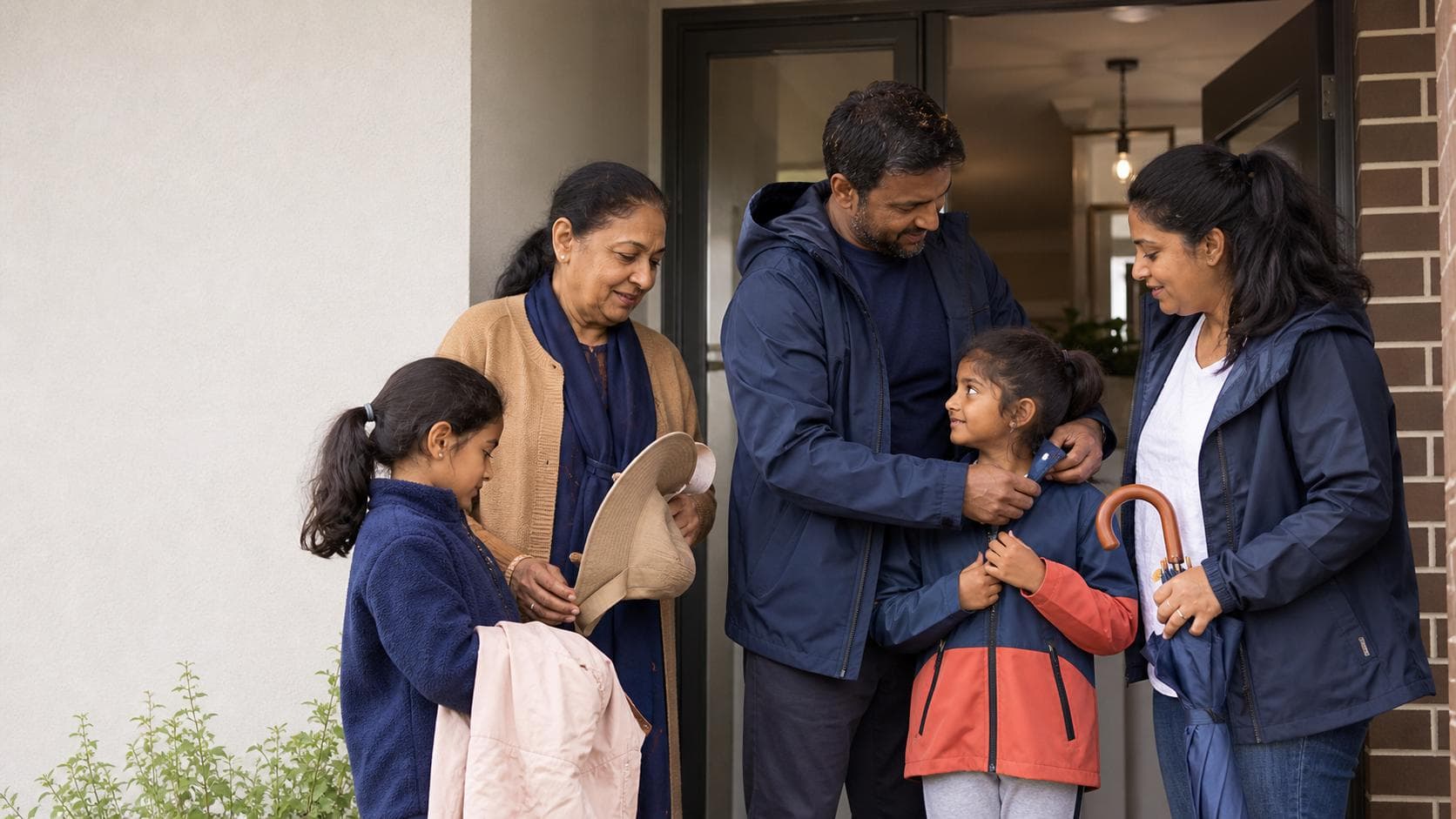
A light layer, water, hat and compact umbrella can solve many ordinary surprises. In colder areas, several thin layers are often more flexible than one heroic jacket. In hot or humid regions, plan shade, hydration and cooler travel times where practical.
At home, learn how your heating, cooling and ventilation work before an extreme day. Test smoke alarms as required and keep outdoor areas tidy ahead of severe weather.
Understand seasonal hazards without living in fear
Bushfire, storm, cyclone, flood and heat risks vary by location and season. Find the official emergency service for your state or territory, identify local alert channels and know where to get current instructions.
Avoid forwarding unverified warning screenshots. Share the official link and timestamp instead, because yesterday’s map is about as useful as yesterday’s hopper at breakfast.
Plan family, study and community activities
For outdoor events, check shade, water, transport, accessible shelter and the organiser’s weather plan. Families can keep spare layers and sun protection ready near the door. Students and shift workers should consider the return journey, not only the weather at departure.
When an event listing changes, confirm the time and venue with the organiser. Weather-related updates should come from the official event contact or a verified listing.
A simple daily weather routine
Morning: forecast, warnings and UV
Before travel: transport disruptions and rain or wind timing
Before an outdoor event: organiser updates, shade and water
During warnings: official instructions, not social-media guesses
Seasonally: review household supplies and emergency contacts
Quick takeaway:Start small, verify important details and build one repeatable local habit.Useful beats rushed.
Make the next step easier with AusLanka
Browse AusLanka for seasonal community events, nearby services and city guides. Always confirm the organiser’s latest details and check official weather information before you set out—especially if the sky looks like it has scheduled its own surprise party.
This article is general information, not emergency or health advice. Follow current Bureau of Meteorology forecasts and warnings, state or territory emergency services, and qualified health advice for your circumstances.