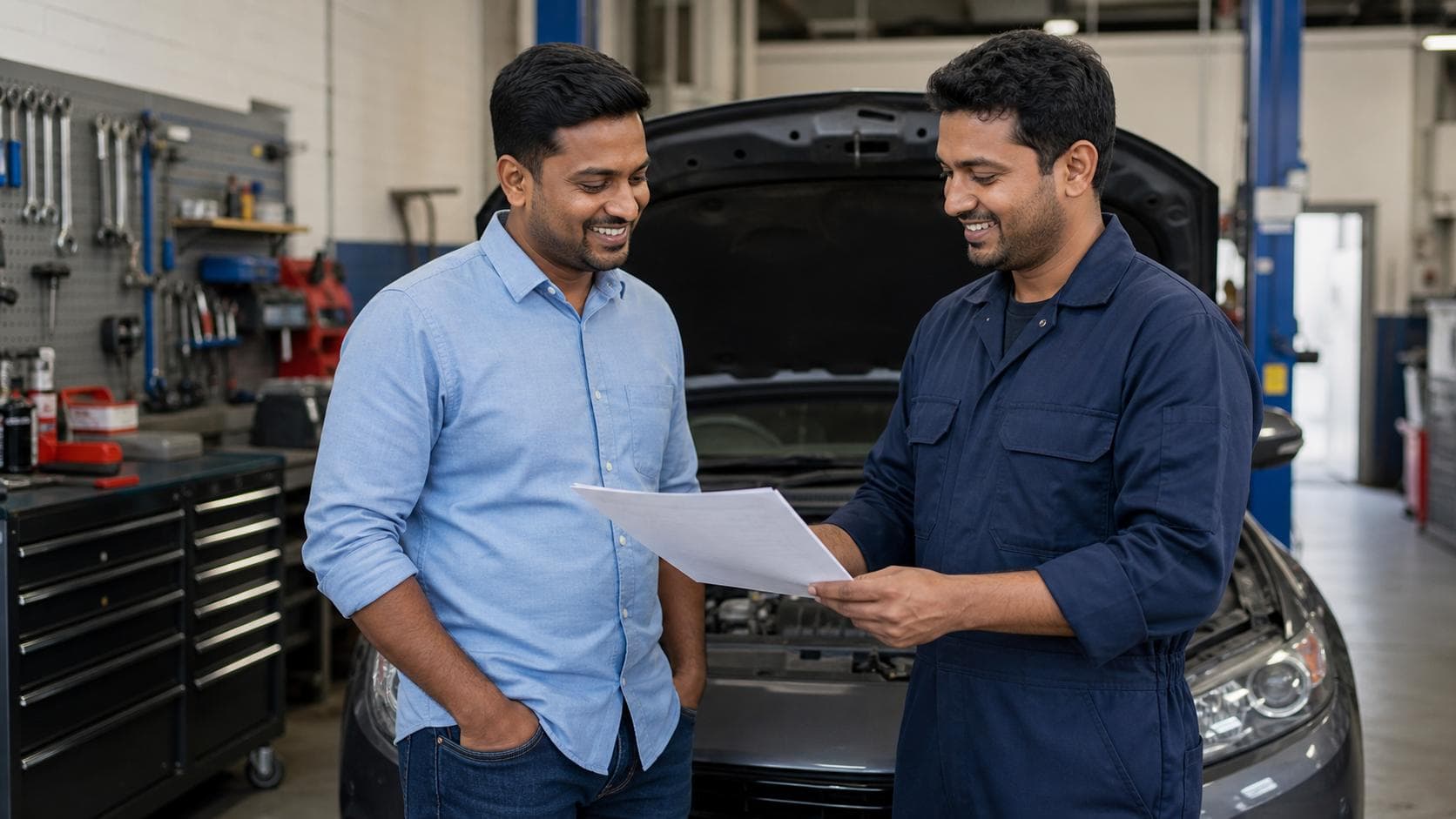
How to Find Sri Lankan Automotive Services in Australia
A practical guide to finding Sri Lankan automotive services in Australia, comparing quotes, checking credentials, discussing parts and keeping clear repair records.
10 August 20267 min readAusLanka Editorial Team
A trustworthy mechanic is worth finding before the dashboard starts lighting up like Vesak decorations. When your car needs servicing or repair, clear communication matters as much as convenience.
AusLanka can help you discover Sri Lankan automotive businesses in Australia. This guide explains how to choose the right type of service, compare estimates and understand what you are approving.
Identify the service you need
Automotive businesses often specialise. Start with the reason for your visit.
You may need:
Scheduled servicing
Mechanical diagnosis and repair
Tyres, wheel alignment or balancing
Auto electrical work
Air-conditioning service
Panel beating or paint repair
Roadworthy or safety inspections
Vehicle detailing
A specialist for a particular make or system
If the vehicle is unsafe to drive, arrange appropriate roadside or towing support. Do not drive simply because the workshop is nearby.
Search by service and location
Browse automotive listings on AusLanka and filter by city or region. Read the full profile to see whether the business handles your vehicle and type of work.
Look for:
Services and vehicle types
Workshop location and hours
Booking and contact options
Relevant licence or registration details
Experience and equipment
Parts and warranty information
Towing, loan-car or after-hours arrangements where offered
A directory profile is a starting point. Confirm current details directly before travelling.
Describe the problem accurately
Tell the repairer what you noticed rather than declaring the cause.
Useful details include:
When the problem began
Warning lights or messages
Sounds, smells or vibration
Whether it occurs hot, cold, moving or stationary
Recent repairs or accidents
Vehicle make, model, year and kilometres
Anything that makes the problem better or worse
‘It makes a knocking sound turning left after rain’ helps diagnosis. ‘My brother says it is definitely the gearbox’ may not.
Check credentials and business details
Motor-repairer licensing and certification requirements vary across states, territories and types of work. Check the current official rules for your location and verify any required licence through the relevant authority.
Ask who will perform the work and whether specialist tasks are subcontracted. An ABN or business name alone does not prove a repair licence.
Ask for a written estimate
For work beyond a simple fixed-price service, ask for an estimate before repairs begin.
It should explain:
Inspection or diagnostic charges
Recommended work
Estimated labour
Parts and fluids
Taxes and other fees
Expected completion time
How additional work will be approved
An estimate may change after diagnosis, but the repairer should contact you before exceeding the agreed limit or adding significant work.
Set an approval limit
Write down the amount or scope the workshop can approve without calling you. Confirm the best contact number and what happens if you cannot be reached.
Ask the repairer to separate urgent safety work from maintenance that can be planned later. This helps you make an informed decision instead of hearing one frightening total.
Understand the parts being used
Ask whether parts are genuine, original-equipment equivalent, aftermarket, reconditioned or used. Different choices may suit different vehicles and budgets.
Confirm:
Why the part is recommended
Price and availability
Warranty terms
Expected effect on other warranties
Whether the old part can be returned or inspected where appropriate
The cheapest part is not always the best value, and the most expensive is not automatically necessary.
Compare quotes fairly
For a major planned repair, compare two or three estimates using the same information. Check whether each includes diagnosis, labour, parts, fluids, calibration and taxes.
A lower quote may use a different part or exclude related work. Ask questions before deciding that one workshop is dramatically cheaper.
Discuss timing and transport
Ask when the vehicle can be inspected, when work could start and whether parts must be ordered. Confirm storage or towing charges if the car cannot be collected promptly.
If a loan car, ride service or pickup is offered, ask about availability, fees, insurance, fuel and licence conditions.
Keep service records
Save the estimate, approval messages, invoice, parts information and warranty documents. A complete history helps future repairers understand what has been done and may support resale.
Make sure the final invoice describes the work and parts clearly. Ask for an explanation of anything that differs from the estimate.
Understand warranties and consumer rights
Ask what warranty the business provides for labour and parts and how to raise a problem. A workshop warranty is additional to rights that may apply under Australian Consumer Law.
The ACCC explains that services supplied to consumers generally come with consumer guarantees, including that services are provided with due care and skill. The remedy depends on the circumstances, and state or territory processes may also apply.
If a problem occurs, contact the business promptly, describe it in writing and give it a reasonable opportunity to respond where appropriate.
Protect payment details
Use the verified business payment method and keep receipts. If bank details change unexpectedly, confirm the change using the public workshop phone number before paying.
Do not share online-banking passwords or security codes. Be cautious about large cash requests with no invoice.
Notice the warning signs
Pause if a repairer:
Will not explain the work
Refuses a written estimate or invoice
Performs major extra repairs without approval
Creates pressure without showing the issue
Cannot provide required licence details
Changes payment details unexpectedly
Promises that every warning light can be fixed by the same expensive repair
A good workshop may discover bad news. It should still communicate it clearly.
Build a long-term relationship
After a satisfactory job, keep the workshop’s details and follow the vehicle’s service schedule. Tell the repairer about changes since the previous visit and ask questions before small concerns become expensive ones.
Fair reviews about communication, timing and completed work can help other community members. Avoid publishing personal staff information or claims you cannot support.
Find automotive services on AusLanka
Use the AusLanka Business Directory to discover Sri Lankan mechanics and automotive services across Australia. Compare the right service, check credentials where required and approve repairs using a clear written estimate.
The goal is simple: know what your car needs, what it will cost and who to call before the dashboard performs another surprise light show.
This article provides general information only. Vehicle safety, repair licensing and consumer requirements vary. Check current official guidance and seek qualified advice for your situation.