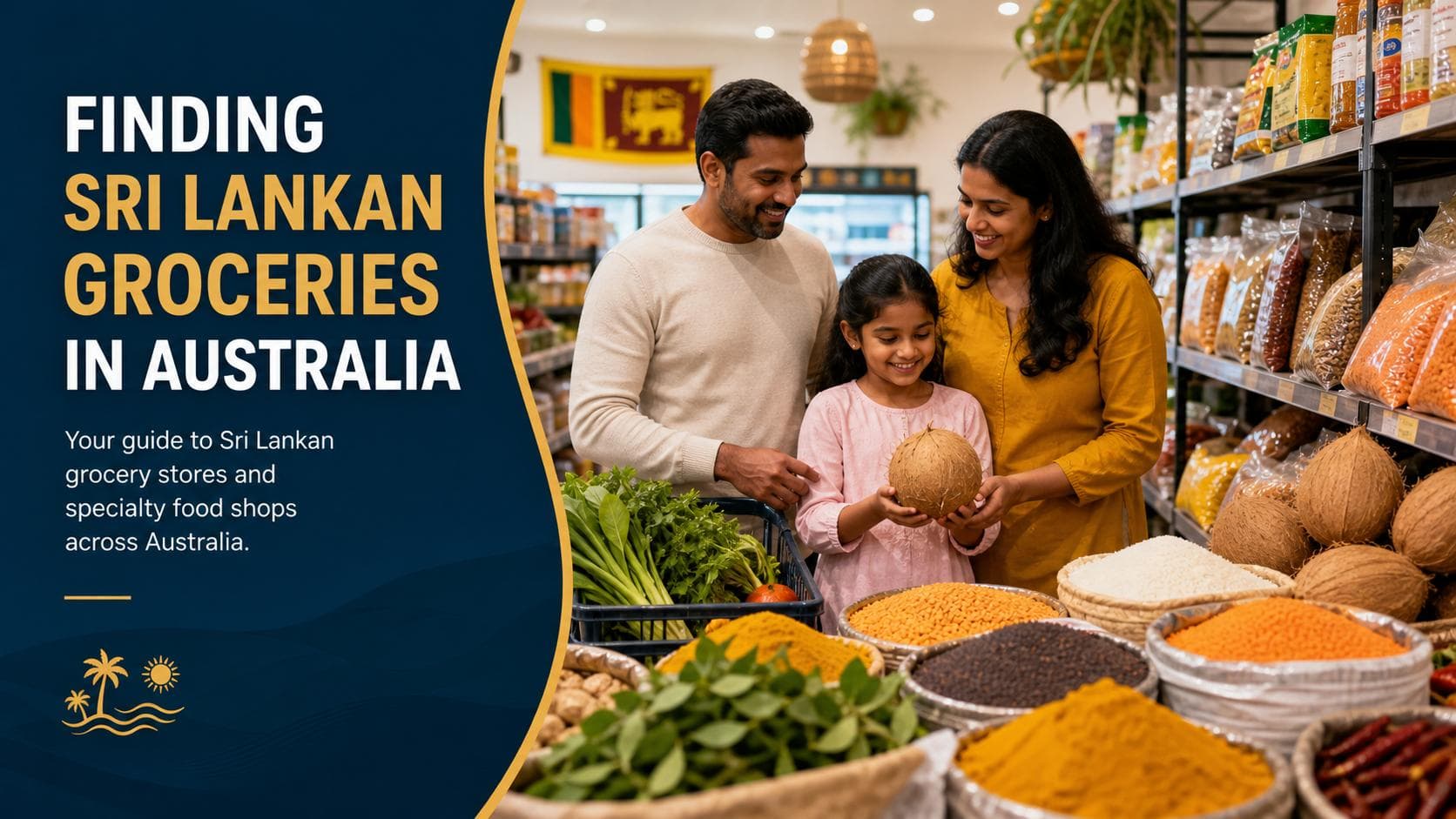
How to Find Sri Lankan Grocery Stores and Specialty Food Shops in Australia
Find Sri Lankan groceries, spices, fresh ingredients and specialty foods in Australia with practical tips for searching, checking stock and shopping locally.
7 August 20267 min readAusLanka Editorial Team
Some ingredients are easy to replace. Others are the reason a dish tastes like home. When the last packet of roasted curry powder disappears or somebody announces hoppers for Sunday breakfast, finding a Sri Lankan grocery store quickly becomes a serious family mission.
Across Australia, Sri Lankan and South Asian grocery businesses help communities find spices, rice, lentils, frozen foods, fresh produce, snacks, drinks, household items and festival favourites. AusLanka can help you discover local businesses without pretending every shop carries every product on every day.
Here is a practical way to search, check the details and shop with confidence.
Begin with your shopping list
Write down the exact items you need before searching. Use the common English name and, where useful, the Sinhala or Tamil name your household uses. Product names and spellings can vary, so a photo of the packet is often more helpful than a fifteen-minute description involving ‘the red one, but not that red one’.
Group the list
Pantry staples: rice, flour, lentils, coconut products and cooking oils
Spices and pastes: curry powders, chilli, pepper, goraka, Maldive fish and sambol ingredients
Fresh or frozen foods: leaves, vegetables, seafood, grated coconut, string hoppers or roti
Snacks and sweets: biscuits, mixtures, short eats, jaggery and festival treats
Household items: cookware, serving items, personal care or cultural products
This helps you decide whether you need a general grocery shop, a fresh-food specialist, a bakery, a butcher, a fish supplier or a store with online delivery.
Search the AusLanka Business Directory
Start with the closest grocery, food retail or related category available in the directory. Add your city, region or suburb to narrow the options.
Read the complete profile instead of relying only on the business name. Some stores specialise in Sri Lankan products, while others stock a broader South Asian or international range. Both may be useful, but the profile should help you understand the likely fit.
Look for:
Physical address and service area
Current opening hours
Phone, website or approved contact options
Product photos or recent updates
Online ordering, delivery or click-and-collect information
Parking, public transport or accessibility details where provided
Search by location realistically
In large Australian cities, the nearest specialist store may be several suburbs away. Check travel time, not only distance. A shop that looks close on a map can become a full expedition once Saturday traffic joins the plan.
If you live outside a capital city, consider businesses that deliver or accept online orders. Confirm delivery areas, minimum orders, cold-item restrictions and expected timing before paying.
Check stock before making a special trip
Specialty stock can change with shipments, seasons and demand. A profile or old social post is useful for discovery, but it is not a live stock guarantee.
For an important or unusual item, contact the business directly. Keep the question simple:
Do you currently have this product or brand?
Is it fresh, frozen or shelf-stable?
What pack size is available?
Can you hold it until a stated time?
Is there a similar alternative?
If the shop is busy, be patient and specific. ‘Do you have curry powder?’ may lead to twelve follow-up questions, because Sri Lankan curry powder is not one peaceful little category.
Check opening hours and holiday changes
Small businesses sometimes change hours around public holidays, cultural celebrations, deliveries or family commitments. Verify the latest public update or call before travelling a long distance.
During Sinhala and Tamil New Year, Vesak, Ramadan, Christmas and major community weekends, popular ingredients can sell quickly. Shop early when the item is essential to a planned meal or event.
Understand labels and dietary needs
Read packaging carefully when allergies, religious requirements or dietary preferences matter. Do not assume a product is suitable because it looks familiar or sits in a particular section.
Check:
Ingredient and allergen information
Best-before or use-by dates
Storage and cooking instructions
Country-of-origin information
Relevant certification shown on the package
Whether frozen items stayed properly cold during transport
Ask the business when you need help locating a label, but make your own decision based on the current product information and professional advice where necessary.
Compare value, not only the sticker price
Pack sizes, brands and quality can differ. Compare the unit quantity and how you plan to use the item. A large bag is not a bargain if half becomes a cupboard resident until the next federal election.
Also consider travel, delivery charges and the convenience of buying several items in one place. Supporting a local store can save future trips by helping the business understand what the community wants stocked.
Ask about alternatives
A good specialty retailer may suggest another brand, pack size or ingredient when your first choice is unavailable. Explain what you are cooking rather than insisting that no substitute has ever existed.
For example, the best alternative for a curry may differ from the best alternative for a sambol or sweet. Staff and other shoppers can have helpful cultural knowledge, but always check dietary and allergy suitability yourself.
Use online ordering carefully
Before placing an online order, confirm:
The store’s delivery area and schedule
Delivery or collection fees
How substitutions are handled
Whether fresh and frozen items are available for delivery
The contact path for a damaged or missing item
The current returns or refund information
Pay through the official business website or verified ordering method. Be cautious if payment instructions change unexpectedly in a message. Confirm through the public contact details first.
Support local grocery businesses
Useful support goes beyond one purchase. You can:
Keep your AusLanka discovery information handy for the next visit.
Follow accurate business updates and offers.
Recommend the shop when you genuinely know it suits someone’s need.
Leave a fair, specific review based on your real experience.
Tell the business politely about products the local community would buy.
Avoid arguing publicly over an item that was simply out of stock.
Small food retailers manage complex supply chains and changing demand. Clear feedback is more useful than a dramatic group-chat announcement that ‘Australia has run out of coconut milk’.
Make a reusable favourites list
Once you find useful stores, note what each one does well: fresh vegetables, frozen short eats, bulk spices, bakery items, delivery or hard-to-find brands. One shop does not need to be perfect at everything.
Keep the business profile or official contact link rather than saving an unexplained phone number. That helps you check current information later and share a reliable source with friends.
Find a Sri Lankan grocery store on AusLanka
Open the AusLanka Business Directory, search the relevant grocery or food category and narrow the results by your location. Read the profiles, verify important stock and hours, and contact the business before making a special trip.
With a little planning, your pantry can stay ready for rice and curry, a last-minute family visit and that mysterious moment when everyone decides they need string hoppers at once.