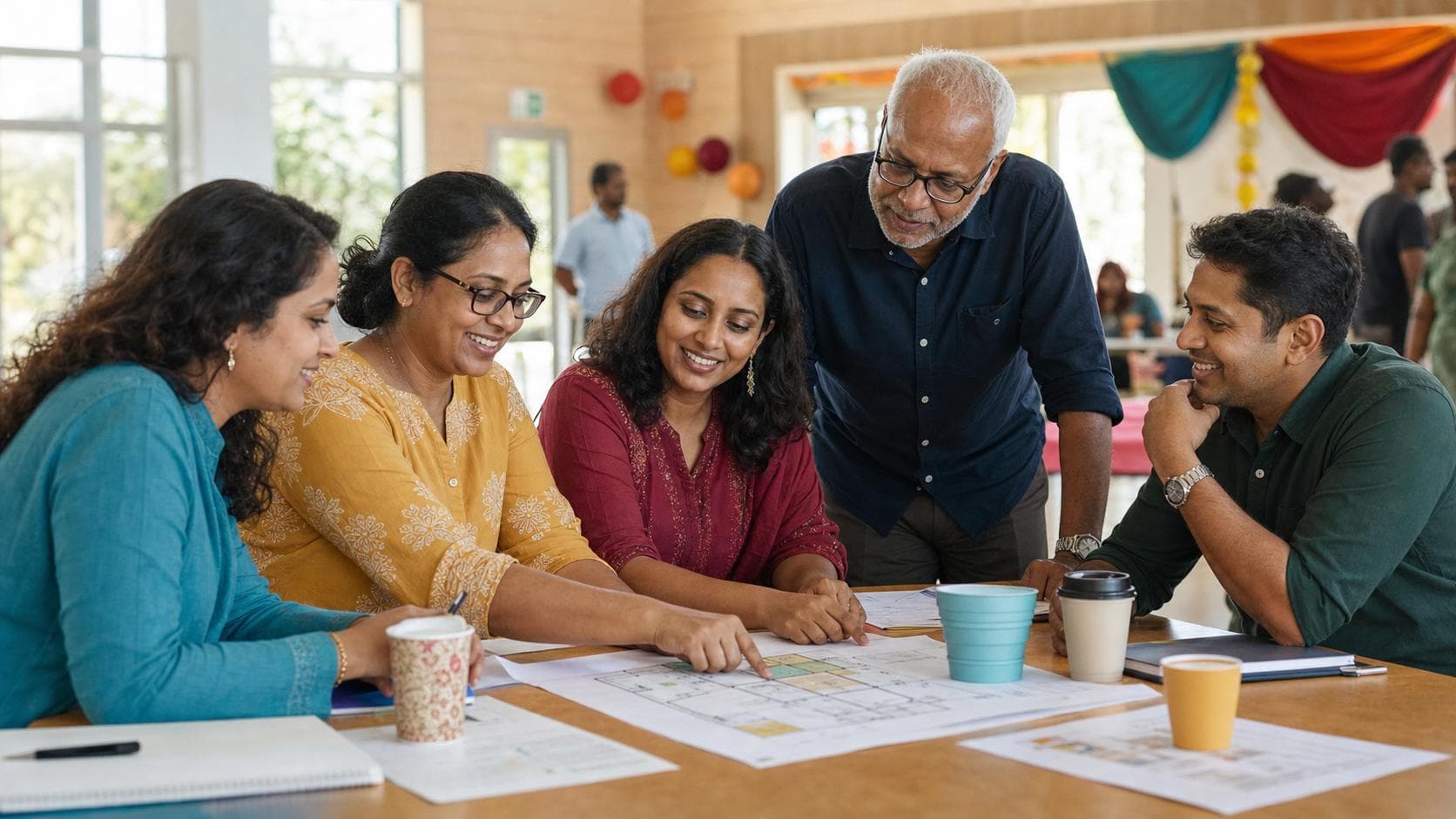
How to Plan a Sri Lankan Community Event in Australia
A practical, friendly guide to planning a Sri Lankan community event in Australia—from purpose, budget and venue checks to accessibility, promotion and the final cup of tea.
3 August 202610 min readAusLanka Editorial Team
Planning a Sri Lankan community event in Australia can begin with one cheerful sentence: ‘Let’s organise something small.’ Two weeks later, the family group chat has 147 messages, three possible halls, four opinions about the rice and curry, and one uncle asking whether the sound system can handle his favourite song.
That energy is part of the fun. The trick is turning it into a clear, welcoming event that people can understand, attend and enjoy. Whether you are organising a cultural celebration, fundraiser, workshop, networking evening, food event or family day, the same foundations apply: define the purpose, build a realistic budget, confirm the practical details and communicate them clearly.
This guide provides a practical planning framework for community organisers. Requirements can differ by state, council, venue and event type, so verify permits, insurance, food, alcohol, child-safety, accessibility and emergency obligations with the relevant venue and official authorities before publishing.
1. Start with a purpose people can repeat
A strong event begins with a simple purpose. If the organising team cannot explain the event in one or two sentences, attendees will struggle too. Decide what you want people to experience or achieve.
Celebrate a cultural or religious occasion.
Raise funds for a clearly named cause.
Help families, students or professionals meet one another.
Teach a skill through a workshop or information session.
Showcase food, music, dance, sport or community businesses.
Write down the intended audience as well. A late-night music event, a children’s activity and a professional networking evening need very different venues, schedules and communication. ‘Everyone is welcome’ is a lovely value, but it is not a complete audience plan.
2. Form a small team with clear responsibilities
Community goodwill is powerful, but a plan based entirely on ‘someone will do it’ usually ends with one exhausted person holding the microphone, the ticket list and a tray of cutlets. Assign clear owners for the main jobs.
Event lead: keeps the overall plan, decisions and deadlines moving.
Venue and operations: manages access, layout, suppliers, safety and event-day logistics.
Program lead: coordinates speakers, performers, activities and timing.
Finance lead: records income, expenses, approvals and payment deadlines.
Marketing and attendee communication: maintains the event page and responds to practical questions.
Volunteer lead: briefs helpers and ensures every shift has a real purpose.
Use one shared checklist and one agreed communication channel. Thirty versions of the same spreadsheet are not a filing system; they are a treasure hunt nobody asked for.
3. Build a budget before choosing the fancy extras
List the essential costs first: venue hire, staffing, equipment, permits, insurance, performers, food, cleaning, security, ticketing, accessibility support, marketing and a contingency amount. Then separate ‘must have’ from ‘nice to have’.
Be conservative about income. Ticket sales, sponsorship and stall fees should be based on realistic capacity and confirmed agreements, not the number of people who reacted with a heart emoji. Keep a written record of who can approve spending and how reimbursements will work.
If the event is fundraising, explain the beneficiary and the way funds will be handled. Clear, modest claims build more trust than dramatic promises.
4. Choose a venue that works for the whole event
A venue is more than a postcode and a stage. Visit it when possible and check how the event will actually flow from arrival to departure.
Legal capacity and the layout you intend to use.
Public transport, parking and safe pickup areas.
Step-free access, accessible toilets and seating options.
Kitchen or food-service rules, power limits and waste arrangements.
Sound restrictions, finishing times and neighbour considerations.
Heating, cooling and wet-weather alternatives.
Spaces for performers, volunteers, children or quiet breaks where relevant.
What the hire fee includes and what must be supplied separately.
Ask for the agreement, cancellation terms and venue rules in writing. If the answer to an important question is ‘it should be fine’, politely keep asking until it becomes a clear yes, no or condition.
5. Confirm permissions, safety and insurance early
Requirements vary by location and event. Speak with the venue and check relevant council and government information early, especially if the event involves public land, temporary structures, amplified sound, food preparation, alcohol, raffles, road access, children, fireworks or a large crowd.
Create a practical risk plan covering emergencies, first aid, weather, crowd movement, lost children, food allergies and the way incidents will be reported. Brief the team on who makes decisions if plans change. This is not about making the event feel gloomy; it is what allows everyone else to relax.
6. Design the program around people, not only performances
Build a running order with realistic changeover time. Include opening, breaks, announcements, meals, prize draws, speeches and the final pack-down. Tell every contributor when to arrive, where to go and how long they genuinely have.
Keep speeches focused. A community event can survive five minutes without a microphone; it may not survive five people each promising to be ‘very brief’. If the audience includes families or older guests, consider the total length, noise, seating and meal timing carefully.
7. Make accessibility part of the plan
Accessibility information should be specific and honest. Ask the venue what is available, inspect it where possible and publish practical details rather than simply saying the event is accessible.
Step-free entrance and accessible toilet availability.
Accessible parking or drop-off information.
Seating choices and space for mobility devices.
Lighting, sound and quiet-space considerations.
Captioning, interpreting or communication support when provided.
A clear contact method for access questions.
If something is not available, say so respectfully and early. Accurate information lets people make their own decisions and helps organisers improve future events.
8. Create one reliable event page
Publish a complete event page that becomes the source people can return to when social posts and screenshots start travelling. Include the date, time, venue, organiser, audience, program, age guidance, accessibility, parking, ticket or registration method, refund information and a contact path.
Eligible organisers can use AusLanka to create and manage a community event listing. Keep the listing updated if the venue, time, program, ticket availability or event status changes. Share the canonical event link in social posts so people see the latest information rather than a poster saved three weeks ago.
9. Promote with clarity and community warmth
Begin promotion once the essential information is confirmed. Use a simple message: what the event is, who it is for, when and where it happens, and what people should do next.
Use a clear event image that remains readable on a phone.
Post reminders at useful intervals instead of repeating the same message daily.
Give partners and performers an approved link and short description to share.
Answer common questions on the event page or in a short FAQ.
Never invent scarcity, attendance numbers or endorsements.
A little humour is welcome; confusion is not. ‘Bring your dancing shoes’ is fun. ‘Venue somewhere near the station, details later’ is how aunties begin an investigation.
10. Prepare volunteers for the event people will actually attend
Send a short briefing that includes arrival time, role, supervisor, dress expectations, breaks, emergency contacts and the plan for handling questions. Give volunteers enough authority to solve ordinary problems and a clear person to contact for bigger ones.
Prepare attendee lists, signs, ticket-scanning or check-in tools, name badges, cashless payment equipment where used, supplier contacts, first-aid arrangements and a printed backup for critical information. Test the microphone, presentation and check-in process before doors open.
11. Communicate calmly on event day
Open with the information attendees need: amenities, exits, program changes, photography expectations and how to ask for help. Keep the event page and organiser channel current if something changes.
Thank people without turning the closing into another full program. Then supervise pack-down, waste, equipment returns, final venue checks and any required incident or financial records.
12. Review while the details are fresh
Within a few days, meet briefly and record what worked, what did not, what attendees asked repeatedly and what should change next time. Compare the final budget with the plan, thank volunteers and suppliers, and share any promised results with the community.
Useful feedback is specific. ‘Great night’ feels good; ‘the check-in line moved slowly because there was only one list’ helps the next event.
A simple community event checklist
Write the purpose, audience and success measure.
Assign owners for program, venue, finance, marketing and volunteers.
Build a realistic budget with contingency.
Confirm the venue agreement and practical access details.
Verify permissions, insurance and safety requirements.
Lock the program and supplier responsibilities.
Publish one complete AusLanka event page.
Promote the current link and answer common questions.
Brief volunteers and test event-day systems.
Update attendees quickly if anything changes.
Complete pack-down, records, thanks and review.
Frequently asked questions
How early should we start planning?
Start as soon as the purpose and likely date are known. Venue availability, permissions, suppliers and performers can require significant lead time, especially around cultural holidays and popular weekends.
Can we publish the event before every detail is final?
Publish only when the essential information is reliable. Clearly label any detail that is genuinely still to be confirmed, and update the event page promptly.
Should we use external registration or AusLanka ticketing?
Use the method that is currently available and appropriate for the event. Label the destination clearly, review the relevant terms and keep external-provider orders separate from eligible AusLanka ticket orders.
What if the venue or time changes?
Update the canonical event page first, then contact registered attendees through the appropriate organiser or ticketing channel. Keep the old information from continuing to circulate where practical.
How can AusLanka help?
Eligible organisers can use AusLanka to publish and manage a community event listing, provide practical attendee information and share one current page across promotional channels.
Take the next step
Use AusLanka to publish and manage an eligible community event.