Social Media Content Ideas for Sri Lankan Restaurants and Cafés
Practical social media content ideas for Sri Lankan restaurants and cafés in Australia, from dishes and ingredients to owner stories, FAQs, events and honest offers.
13 August 20269 min readAusLanka Editorial Team
Restaurant social media becomes difficult when every post is expected to be a masterpiece. Meanwhile, the kitchen is busy, the lunch rush has arrived and somebody has used the last clean serving spoon for a behind-the-scenes video.
The easier approach is to build repeatable content series. Show what customers genuinely want to know, use images you have permission to publish and connect each useful post to current business information.
The Australian Government’s social media for business guide recommends choosing channels that suit your customers and resources, planning content in advance and writing for people first.
1. Dish of the week
Feature one dish with a clear name, short description, availability and ordering information. Explain the texture, key ingredients and whether customers should ask about dietary needs.
Avoid unsupported claims such as “Australia’s best kottu.” “Chopped roti cooked with vegetables, egg and our house spice mix” is useful; the national championship can wait for an actual trophy.
2. Ingredient stories
Introduce one ingredient: curry leaves, pandan, goraka, roasted curry powder, jackfruit or a seasonal Australian ingredient used in the menu.
What flavour or aroma does it bring?
Which dishes use it?
How does the kitchen prepare it?
Is availability seasonal?
Can customers request alternatives?
Keep health and nutrition claims accurate and within the law. Food can be delicious without being promoted as a miracle treatment.
3. The owner or family story
Share why the restaurant began, what the team hoped to offer and which values guide the service. Focus on the real journey rather than inventing a dramatic origin myth involving a secret recipe rescued during a monsoon.
Ask everyone shown for permission and avoid sharing private family information.
4. Meet the team
Introduce consenting staff members and what they enjoy about their work. A short quote, role and favourite menu item can humanise the business.
Do not pressure staff to appear online. Never publish rosters, private contact details or personal documents.
5. From prep to plate
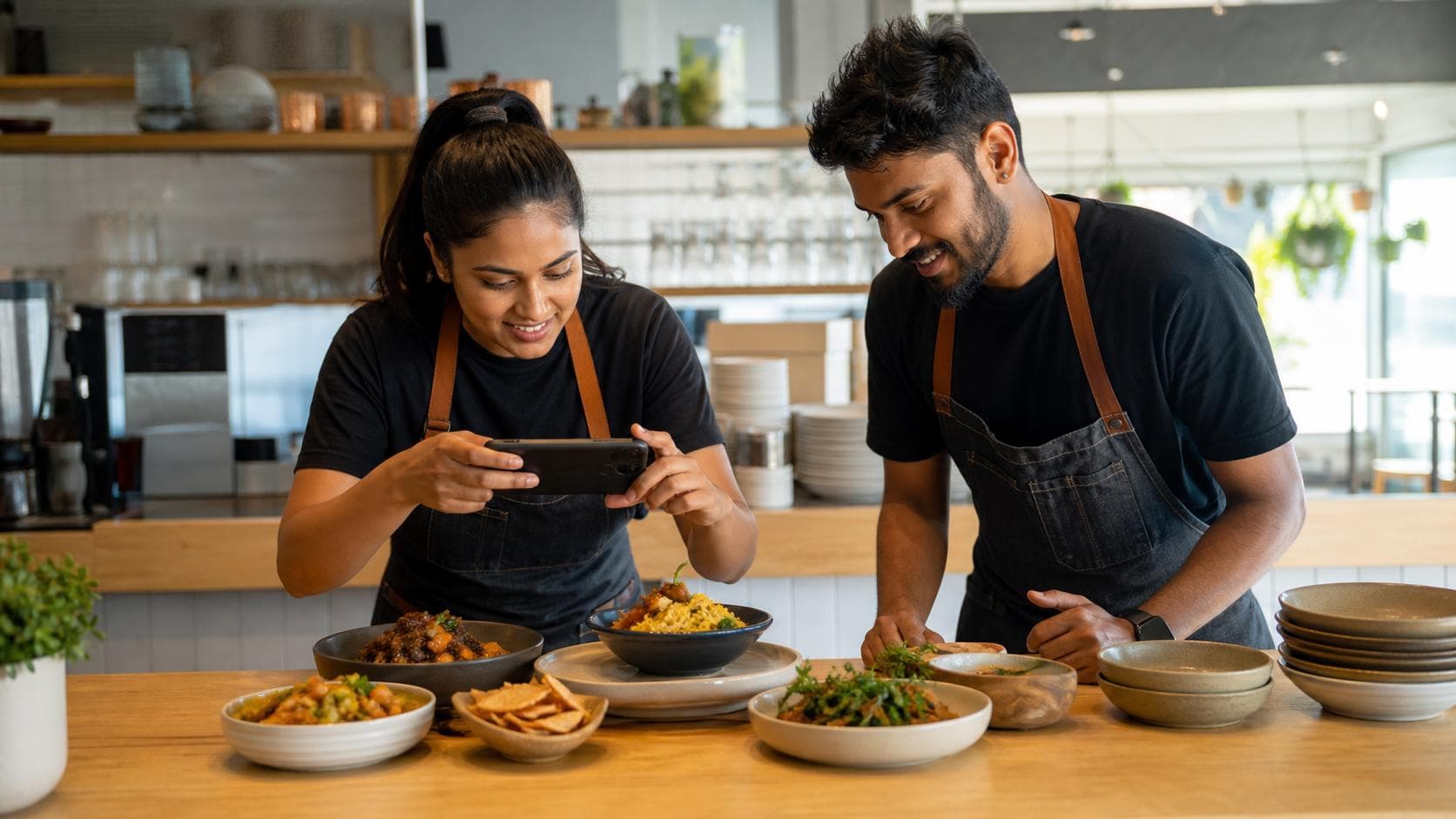
Show a clean, safe part of preparation: rolling hoppers, plating rice and curry, shaping short eats or setting up the dining room. Choose moments that represent normal practice accurately.
Avoid filming sensitive paperwork, customer orders, payment screens or anything that compromises food safety.
6. “How do I eat this?” guides
New customers may appreciate friendly explanations. Show how a hopper is paired with sambol and curry, what accompanies lamprais or how a tasting menu is structured.
Keep it welcoming. There is no entrance exam for enjoying Sri Lankan food.
7. Spice-level explanations
Explain how your kitchen describes mild, medium and hot. Clarify whether heat can be adjusted and whether chilli level changes the intended dish.
“Sri Lankan mild” and “Australian mild” have inspired many brave conversations. A simple description is kinder than turning dinner into a surprise endurance event.
8. Dietary and allergen FAQs
Answer common questions carefully without promising that a meal is safe for every person. Encourage customers with allergies or medical dietary needs to contact the restaurant directly before ordering.
Which dishes may be vegetarian or vegan?
Where could cross-contact occur?
Can ingredients change?
How should customers ask before ordering?
Verify every statement with the current kitchen team.
9. Lunch, dinner and takeaway routines
Show what is available at different times, how to order and when the kitchen stops accepting orders. Update posts when the routine changes.
Link to the current AusLanka profile or official ordering destination rather than relying only on a graphic that may be shared months later.
10. Customer questions
Turn repeated questions into posts: Do you take bookings? Is there parking? Do you cater? Can large groups sit together? Are high chairs available? Is the entrance accessible?
Useful answers often outperform generic “Happy Friday” posts because they remove a real obstacle.
11. Neighbourhood guides
Help customers plan the visit with public transport, parking and nearby landmarks. Confirm information before posting and avoid telling customers to park somewhere they cannot legally use.
12. Catering examples
Show the type of event, general menu style and enquiry lead time without exposing a customer’s private event. Obtain permission before publishing identifiable venues, guests or branding.
13. Seasonal and cultural moments
Plan thoughtful posts around Sinhala and Tamil New Year, Vesak, Deepavali, Ramadan, Christmas, school holidays or local community events when relevant to the business and team.
Explain traditions respectfully and avoid presenting one family’s practice as universal.
14. Honest offers
Promote a real offer with dates, eligible items, location, limits and redemption instructions. State the total price and important conditions clearly.
Use AusLanka deals or business updates where available so customers can find the current version. Urgency should be genuine; “last chance” every Tuesday becomes a weekly comedy series.
15. Community collaborations
Share genuine work with a local grocer, performer, charity, association or event organiser. Tag partners only with permission and describe the relationship accurately.
16. Customer celebrations—with consent
A birthday table or catering event can make warm content, but ask before taking and publishing photos. Be especially careful with children and private functions.
17. Short video hooks
“Three things to know before ordering hoppers”
“What goes into today’s rice and curry?”
“Mild, medium or hot: how our kitchen describes spice”
“A 20-second tour of our takeaway counter”
“What to order for a group trying Sri Lankan food”
Deliver the useful answer quickly. Do not make viewers watch thirty seconds of suspense to learn the opening time.
Build a simple weekly rhythm
Monday: dish or ingredient
Wednesday: behind the scenes or team
Friday: weekend availability, event or offer
Sunday: FAQ, customer guide or next-week reminder
Choose a pace the team can maintain. Business.gov.au notes that it is better to use one or two channels well than many channels badly.
Turn attention into a useful next step
Every post does not need a hard sell. When action is relevant, give one clear next step: view the menu, check the AusLanka profile, call, book, order or read the offer terms.
Keep the AusLanka profile current so social followers have one reliable place to verify hours, location, contact methods, photos, deals and updates. Good content creates interest; accurate information helps somebody actually arrive before the kitchen closes.
This article provides general marketing information only. Verify food, allergen, pricing, promotional and privacy statements for your business and obtain professional advice where needed.